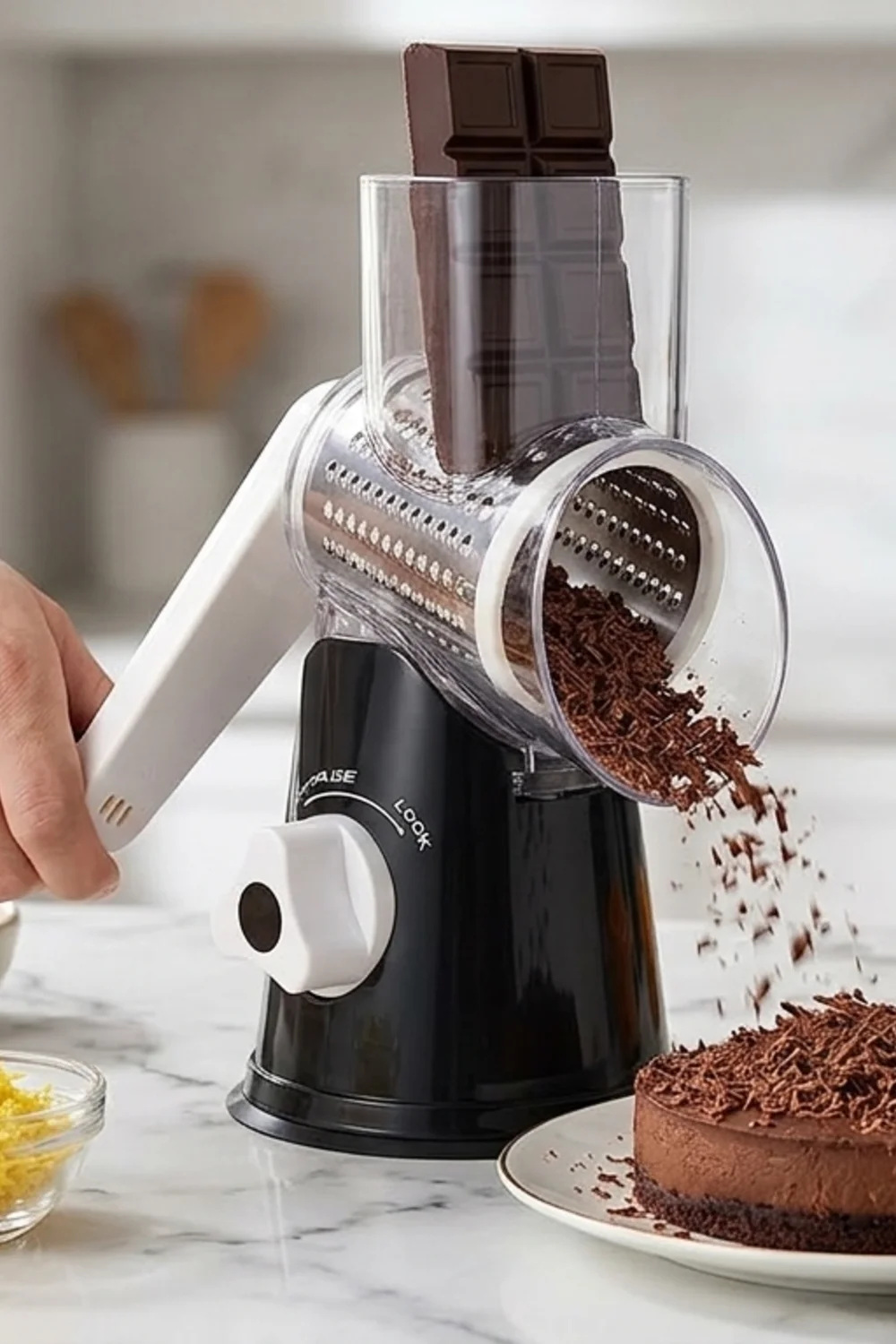
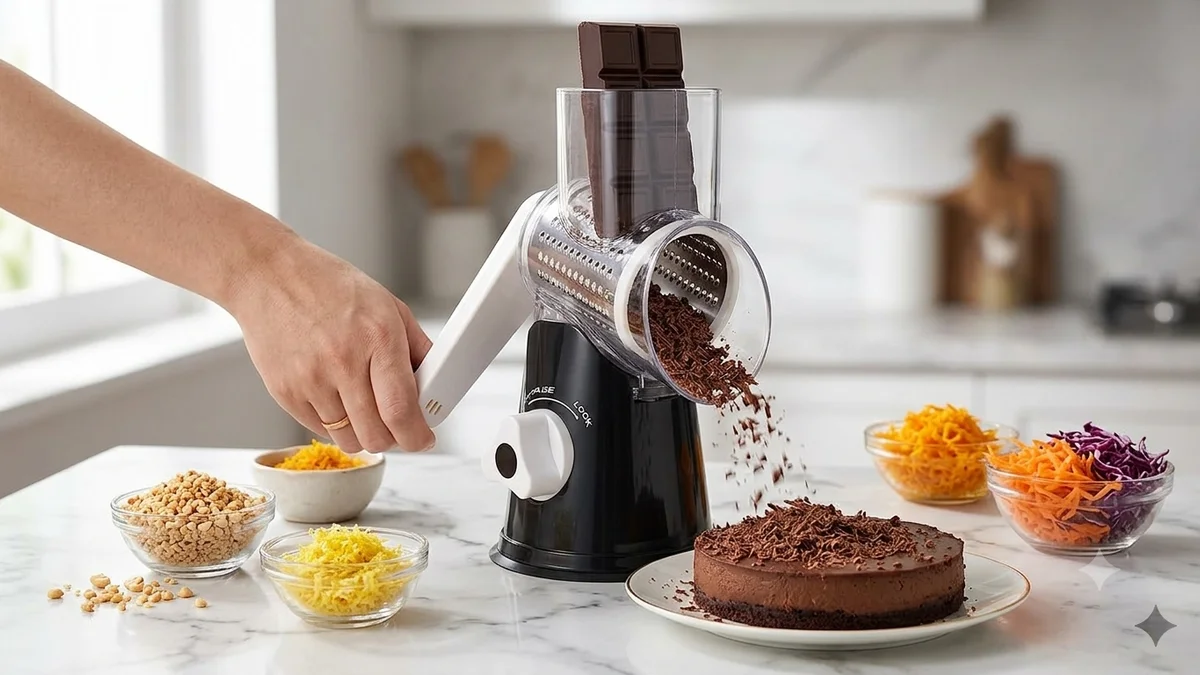
Beyond cheese, a rotary grater handles chocolate, nuts, garlic, ginger, frozen butter, breadcrumbs, hard-boiled eggs, citrus zest, and firm vegetables. Use the fine drum for chocolate, nuts, garlic, ginger, eggs, and zest, and the coarse drum for vegetables, frozen butter, and breadcrumbs. The cold-first rule does most of the work: Hotel Chocolat chills chocolate and the grating tool for 15 minutes before grating, and America’s Test Kitchen freezes butter for 30 minutes before grating it for flaky biscuits.
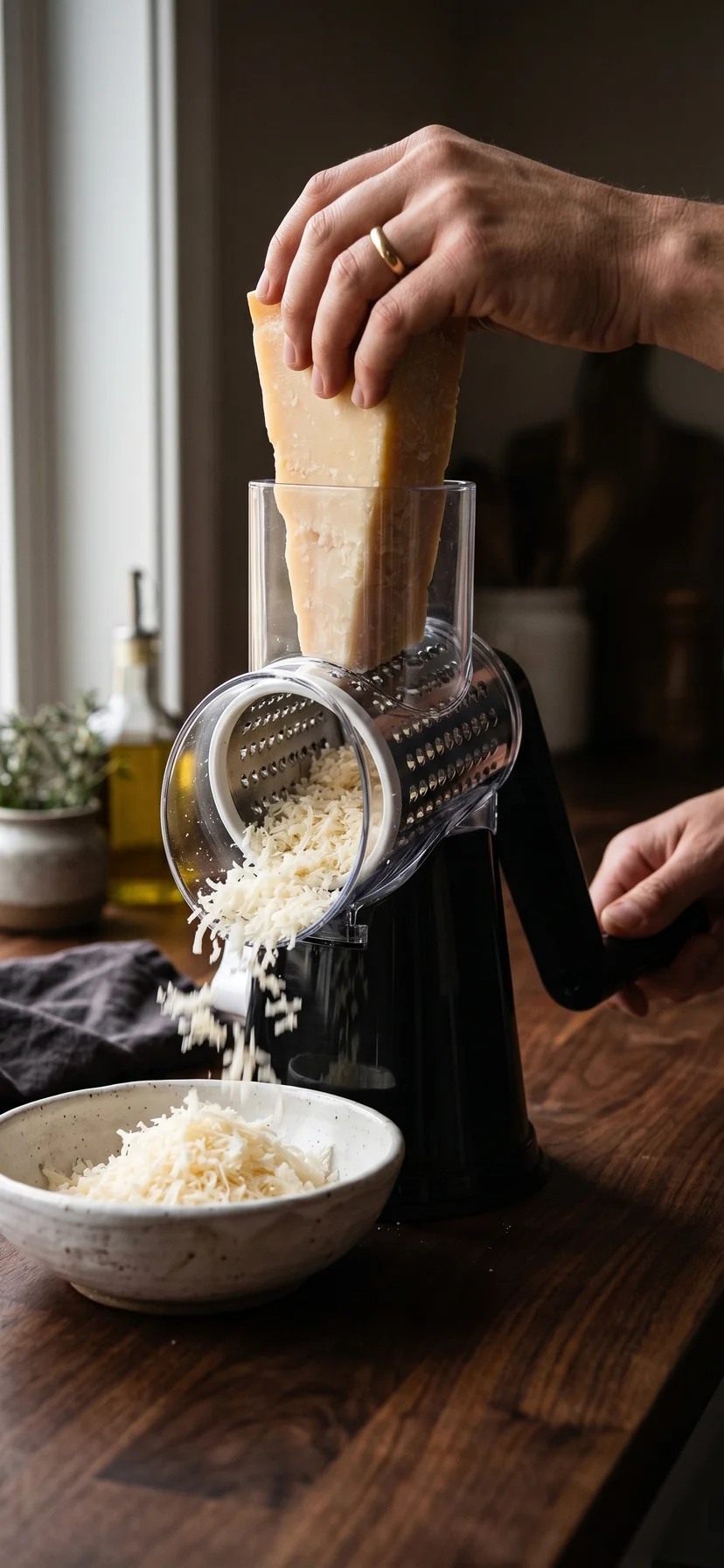
Most people buy a rotary grater for Parmesan and stop there. The same hand crank and drum that shred cheese also turn out chocolate curls, garlic paste, and frozen-butter shreds for pastry. The Cambom rotary grater is rated for cheddar, mozzarella, parmesan, romano, and mascarpone plus chocolate, nuts, vegetables, and zest, so the 15 uses below all run on one tool. The chill times and techniques here come from test kitchens and tool makers, with each source named so you can check it.
What Can You Grate With a Rotary Grater Besides Cheese?
Here are 15 foods a rotary grater handles well, with the drum to reach for each time.
- Chocolate. Fine drum. Chilled dark or milk chocolate grates into snowy curls for cappuccinos, tiramisu, and cake tops. Hotel Chocolat says milk and white chocolate especially need to be well chilled, since their cocoa butter melts fast against your skin.
- Nuts. Fine drum. Almonds, walnuts, hazelnuts, and pistachios grind into a light meal for baking, garnishes, and dukkah without the oily clumps a blender makes.
- Garlic. Fine drum. Peeled cloves turn into a smooth paste that spreads through dressings, marinades, and sauces, with no sticky fingers.
- Ginger. Fine drum. A peeled chunk grates into a fine pulp for stir-fries, tea, and curries. The hopper keeps the fibers and juice contained.
- Frozen butter. Coarse drum. Shred cold butter straight into flour for flaky biscuits, scones, and pastry. America’s Test Kitchen freezes butter 30 minutes first so it stays in individual pieces through mixing.
- Breadcrumbs. Coarse drum. Stale or toasted bread becomes fresh crumbs in seconds for coatings, gratins, and meatballs.
- Hard-boiled eggs. Fine drum. A peeled cold egg grates into fluffy, even pieces for egg salad, ramen toppings, and salad garnish.
- Citrus zest. Fine drum. Lemon, lime, and orange peel grate into bright zest that lifts baking and dressings. (For citrus, garlic, and nutmeg, the Cambom lemon zester and grater set is the dedicated tool.)
- Carrots. Coarse or slicing drum. Coarse for slaw and carrot cake; slicing for thin rounds.
- Zucchini. Coarse drum. Quick shreds for fritters, bread, and stir-fries. Squeeze out the water before cooking.
- Potatoes. Coarse drum. Shred for hash browns and rosti faster than a box grater.
- Apples and hard fruit. Coarse drum. Shredded apple folds into muffins, oatmeal, and slaw.
- Beets. Coarse drum. Raw beet shreds for salads and slaw, with the mess kept off your board.
- Coconut and dried spices. Fine drum. Firm dried coconut and hard spice pieces grind into a fine powder.
- Chilled hard cheeses for non-cheese dishes. Fine drum. Frozen Parmesan rinds and hard cheese for breadcrumb-style toppings.
Which Drum Should You Use for Each Food?
Match the food to the drum and chill anything soft or sticky first. The table below pairs each food with the right Cambom drum and a tip drawn from how each food behaves against the grating surface.
| Food | Drum | Tip |
|---|---|---|
| Dark or milk chocolate | Fine | Chill 10 to 15 min so it curls instead of smearing |
| Almonds, walnuts, hazelnuts | Fine | Grate small batches to avoid oily clumping |
| Garlic | Fine | Peel first; grates into a smooth paste |
| Ginger | Fine | Peel a firm chunk; hopper traps the fibers |
| Hard-boiled eggs | Fine | Use cold, peeled eggs for fluffy pieces |
| Citrus zest | Fine | Press lightly to skip the bitter white pith |
| Coconut, hard spices | Fine | Use firm, dried pieces for a fine powder |
| Frozen butter | Coarse | Keep cold; refreeze shreds 10 to 15 min before use |
| Breadcrumbs | Coarse | Stale or toasted bread grates cleaner than fresh |
| Carrots, beets | Coarse | Shred raw for slaw and salads |
| Zucchini | Coarse | Squeeze out water before cooking |
| Potatoes | Coarse | Fast hash browns and rosti |
| Apples, hard fruit | Coarse | Fold shreds into muffins and oatmeal |
| Thin carrot or veg rounds | Slicing | Use the slicing drum for slices, not shreds |
| Soft mozzarella, mascarpone | None | Too soft; chill hard or use another tool |
How Long Should You Chill Each Food Before Grating? (Cited Times)
The hardest part of grating soft or fatty foods is keeping them firm against the drum. Cold food flakes off in clean shreds; warm food smears and clogs. The table below collects the published chill and freeze times from test kitchens and tool makers, with the source for each row and an honest note on what it covers.
| Food | Chill or freeze time | Why | Source |
|---|---|---|---|
| Butter for flaky biscuits | Freeze 30 min, then grate | Keeps butter in individual pieces through mixing and shaping | America’s Test Kitchen |
| Butter shreds (after grating cold) | Refreeze 10 to 15 min | A fully frozen stick is too hard and slippery to grate safely; grate cold, then firm the shreds | King Arthur Baking |
| Butter for laminated puff crust | Freeze at least 30 min, up to several days | Holds the grated layer firm until you laminate | King Arthur Baking |
| Chocolate (and the grating tool) | Chill 15 min | Milk and white chocolate melt fast on contact with skin | Hotel Chocolat |
| Soft cheese, soft butter at room temp | Chill hard first or skip | Compresses and jams the drum instead of shredding | Cambom kitchen guidance (qualitative) |
Two notes keep these times honest. The butter freeze times come from box-grater recipes, not from a rotary-drum test; the rotary coarse drum does the same job in an enclosed hopper, so read them as a guide for the food, not a spec for the tool. We did not find a published chill time for a soft cheese against a rotary drum specifically, so that row stays qualitative.

Which Drum Should I Use to Grate Chocolate?
Use the fine drum for chocolate. It produces light, snowy curls that melt fast into hot drinks and dust evenly over desserts. Hotel Chocolat recommends chilling both the chocolate and the grating tool in the fridge for 15 minutes before grating gently, and warns that milk and white chocolate need extra chilling because their cocoa butter melts fast against your skin.
The cold-first rule that keeps cheese from sticking applies to chocolate. Warm chocolate compresses and clogs the drum holes; cold chocolate flakes off in clean curls. Microplane draws the texture line by blade: a fine blade turns a chocolate bar into the snow you want for hot chocolate and the delicate flakes you scatter over a cake, while coarser blades give crunchy pieces for muffin or cake batter.
Can You Grate Nuts and Vegetables With a Rotary Grater?
Yes. The Cambom rotary grater is rated for nuts and vegetables alongside cheese. Use the fine drum for almonds, walnuts, and hazelnuts, and the coarse drum for carrots, zucchini, potatoes, and beets. For firm vegetables you want in thin slices instead of shreds, swap to the slicing drum.
Nuts grate best in small batches so the oils don’t clump. Watery vegetables like zucchini shred fine on the coarse drum. Squeeze the shreds dry in a towel before they go into fritters or bread.
Will a Rotary Grater Handle Frozen Butter?
Yes, and grated butter is one of its best non-cheese uses. For its Ultimate Flaky Buttermilk Biscuits, America’s Test Kitchen freezes butter for 30 minutes, coats the sticks in flour, then grates 7 tablespoons from each stick on the large holes of a box grater straight into the flour. Freezing first keeps the butter in individual pieces through mixing and shaping, which is what builds the flaky layers. The rotary coarse drum does the same job in an enclosed hopper.
One safety note matters here. King Arthur Baking found that a fully frozen stick can be too hard and slippery to grate safely. Their fix: grate a stick of cold butter, then refreeze the shreds for 10 to 15 minutes to firm them up before they go into the dough. They also suggest lightly coating the stick in flour before grating, which makes it easier to handle and keeps it from melting in your hand. Grating ensures the shreds are all the same size, which yields more consistent biscuits.
How Do You Grate Garlic and Ginger Without a Mess?
Use the fine drum and feed peeled cloves or a chunk of peeled ginger into the hopper. The fine drum turns them into a smooth paste that spreads through a dish more evenly than chopping, and the enclosed hopper keeps the smell and juice off your hands and board.
Chowhound makes the case for a fine grate over a press. A garlic press crushes the clove and often leaves part of it intact, so you still have to chop the rest, while a fine grater takes the whole clove evenly into the dish. Garlic paste melts into dressings and marinades in a way chopped garlic does not. Grated ginger gives stir-fries and tea a smoother heat than minced pieces. Both run cleaner than a box grater because the hopper contains the mess.
Can You Grate Citrus Zest and Nutmeg?
For zest, the fine drum lifts the bright outer peel. Microplane notes that when you zest only the tart outer skin and leave the white pith untouched, the zest carries no bitterness and the lemon aroma comes through clean. There is a savory trick too: you can freeze a whole lemon and grate it entirely, skin, pith, and flesh, for a more bitter profile that suits dishes like Irish stews and osso buco.
Whole nutmeg is the one spice to keep off the plastic drums. It suits a microplane instead. Chowhound recommends tilting the microplane vertically and sliding the nutmeg up and down, letting the ground spice gather underneath, and notes that freshly grated nutmeg tastes far better than pre-ground. For zest, garlic, and nutmeg, the Cambom lemon zester set is the dedicated tool.
What Makes a Rotary Grater Good for These Jobs?
The drum stays enclosed, so juice, smell, and shreds land where you want them and not across the board and your knuckles. The Cambom grater uses three drums (coarse shred, fine shred, and slicing), a BPA-free food-grade plastic build, and a suction-cup base that grips a smooth counter while you crank. It needs no electricity, so it works the same for chocolate at the dessert station as for cheese over pasta.
A box grater leaves you holding the food against open blades and sends shreds flying. The rotary version contains the food in the hopper and the shreds in the bowl below, which matters most for sticky jobs like garlic, ginger, and frozen butter.
How We Sourced These Numbers
Every chill time, freeze time, and technique above comes from a test kitchen or a tool maker, not from our own marketing. Here is each source and what it covers, with the honest limits.
- America’s Test Kitchen, Ultimate Flaky Buttermilk Biscuits: the 30-minute butter freeze, the flour coat, and grating 7 tablespoons per stick on the large holes of a box grater, plus why freezing keeps butter in individual pieces. Measured for a box grater, not a rotary drum, so we apply it to the food.
- King Arthur Baking, For the flakiest biscuits, grate your butter: the 10-to-15-minute refreeze for grated shreds, the warning that a fully frozen stick is too hard and slippery to grate safely, the flour-coat tip, and why even-sized shreds yield more consistent biscuits. Editorial recipe guidance.
- King Arthur Baking, Flaky Puff Crust Pizza: grating butter on the large holes of a box grater and freezing the layer at least 30 minutes, up to several days, before laminating. Recipe instruction.
- Hotel Chocolat, How to grate and chop chocolate: the 15-minute chill for chocolate and the grating tool, and why milk and white chocolate melt fast against skin. Editorial guidance.
- Microplane, Chocolate and Lemon food guides: how fine versus coarse blades change chocolate texture, why zesting only the outer skin avoids bitterness, and the frozen whole-lemon trick. Manufacturer guidance.
- Chowhound, garlic press vs microplane and how to grate fresh nutmeg: why a fine grate beats a press on garlic, and the vertical microplane technique for nutmeg. Editorial guidance.
We did not find a verified published number for several things people search for: a flavor-potency multiplier for fresh versus pre-ground nutmeg, zest yield per lemon in teaspoons, or a chill time tested against a rotary drum specifically. Rather than repeat a figure we could not open and confirm, we left those claims qualitative. The butter and chocolate times come from box-grater and microplane sources; the rotary coarse and fine drums do the same work in an enclosed hopper.
Frequently Asked Questions
Which drum should I use to grate chocolate? Use the fine drum for chocolate. It produces light, snowy curls that melt fast into hot drinks and dust evenly over desserts. Hotel Chocolat recommends chilling both the chocolate and the grating tool in the fridge for 15 minutes before grating gently, and notes that milk and white chocolate especially need to be well chilled because their cocoa butter starts to melt fast on contact with your skin. Microplane makes the same point about texture: a fine blade turns a chocolate bar into the snow you want for hot chocolate and delicate flakes for a cake top, while coarser blades give crunchy pieces for batter.
Can you grate nuts and vegetables with a rotary grater? Yes. The Cambom rotary grater is rated for nuts and vegetables alongside cheese. Use the fine drum for almonds, walnuts, and hazelnuts, and the coarse drum for carrots, zucchini, potatoes, and beets. For firm vegetables you want in thin slices instead of shreds, swap to the slicing drum.
Will a rotary grater handle frozen butter? Yes, and grated butter is one of its best non-cheese uses. America’s Test Kitchen freezes butter for 30 minutes, coats the sticks in flour, then grates 7 tablespoons from each stick on the large holes of a box grater straight into the flour for its Ultimate Flaky Buttermilk Biscuits, because freezing keeps the butter in individual pieces through mixing and shaping. The rotary coarse drum does the same job in an enclosed hopper. One caution from King Arthur Baking: a fully frozen stick can be too hard and slippery to grate safely, so grate cold butter, then refreeze the shreds for 10 to 15 minutes to firm them up before they go into the dough.
How do I grate garlic and ginger without a mess? Use the fine drum and feed peeled cloves or a chunk of peeled ginger into the hopper. The fine drum turns them into a smooth paste that spreads through a dish more evenly than chopping. Chowhound makes the case for a fine grate over a press: a garlic press crushes the clove and often leaves part of it intact so you still have to chop it, while a fine grater takes the whole clove evenly. The enclosed hopper keeps the smell and juice off your hands and board.
Can you make breadcrumbs in a rotary grater? Yes. Grate stale or lightly toasted bread on the coarse drum to make fresh breadcrumbs in seconds. Slightly dry bread grates cleaner than fresh soft bread, which can compress against the drum. Store the crumbs in the freezer and grate more as you need them.
What foods should you not put in a rotary grater? Skip very soft, wet, or sticky foods at room temperature, such as soft mozzarella, mascarpone, ripe tomatoes, and warm butter, because they compress and jam the drum instead of shredding. Chill soft cheese and butter hard first, or use a different tool. Whole nutmeg suits a microplane instead: Chowhound recommends tilting the microplane vertically and sliding the nutmeg up and down, since freshly grated nutmeg tastes far better than pre-ground.
Ready to Grate More Than Cheese?
The Cambom Rotary Cheese Grater comes with three interchangeable drums (coarse shred, fine shred, and slicing), a BPA-free food-grade plastic body, and a suction-cup base, and it runs with no electricity. It’s the #1 Best Seller in Cheese Graters on Amazon, with 6,000+ bought in the past month. Buy it on Amazon →
Reviewed by the Cambom Kitchen Team. Updated June 26, 2026.