To dry fresh pasta without sticking, toss the cut strands in flour, separate them by hand, and hang them on a drying rack in dry, ventilated air. Floured strands with space between them cannot bond, and bonding is what clumps the pasta. For storage, King Arthur Baking says to dry pasta overnight or up to 24 hours.
A single mass of stuck-together spaghetti tops the list of homemade-pasta failures. Wet surface starch causes it, and strands that touch before they dry seal the problem in. This guide gives you the full method, a dry-time chart drawn from test kitchens, the fix for curling, and how to freeze pasta instead.
Why Does Fresh Pasta Stick Together?
Fresh pasta sticks because the cut surface carries a coat of wet, tacky starch. Two strands that touch while wet fuse into one piece as they dry, and you cannot pull them apart afterward. A dry coating of flour sits between the strands, so they slide past each other rather than bond.
Semolina is the classic coating for a reason. King Arthur Baking explains that semolina’s “coarse texture helps keep doughs from sticking,” and its high protein content “yields a dough that’s easy to work with: less sticky and more elastic.” In its fresh pasta recipe, King Arthur tosses the cut noodles on a semolina-dusted sheet, then coils them into loose mounds.
Room humidity sets how long the tacky window lasts. In dry air the surface sets quickly. In humid air it stays sticky longer. None of the test kitchens we checked publish a home relative-humidity target in percent, so treat humidity as a lever rather than a dial: drier air and good airflow set the surface faster.
How Do You Dry Fresh Pasta Without It Sticking?
Flour the strands, separate them, and give each one air on a rack. Here is the full sequence.
Step 1: Flour the cut pasta The moment you cut the pasta, toss it in semolina, rice flour, or cornstarch. A light dusting coats the wet surface so strands can’t bond. Semolina absorbs less moisture than all-purpose flour and stays powdery rather than gummy. Go light: America’s Test Kitchen warns that dusting with too much flour “may result in the dough snapping back into shape as you roll.”
Step 2: Separate the strands Shake out and separate every strand by hand before it goes on the rack. Anything stuck together now dries into a permanent clump. King Arthur Baking spreads cut noodles “in a single layer on a floured baking sheet or clean kitchen towel,” keeping the pieces from overlapping.
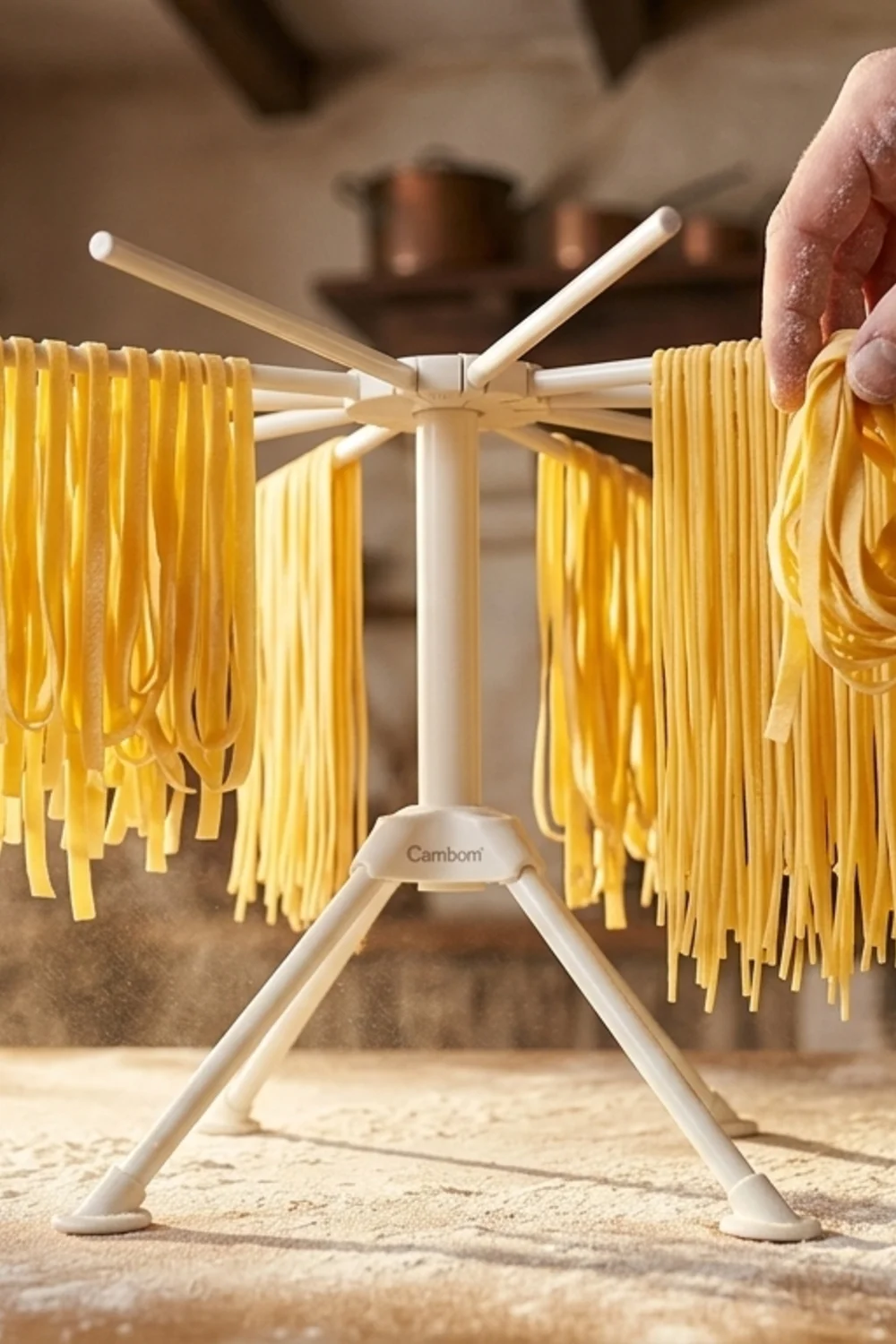
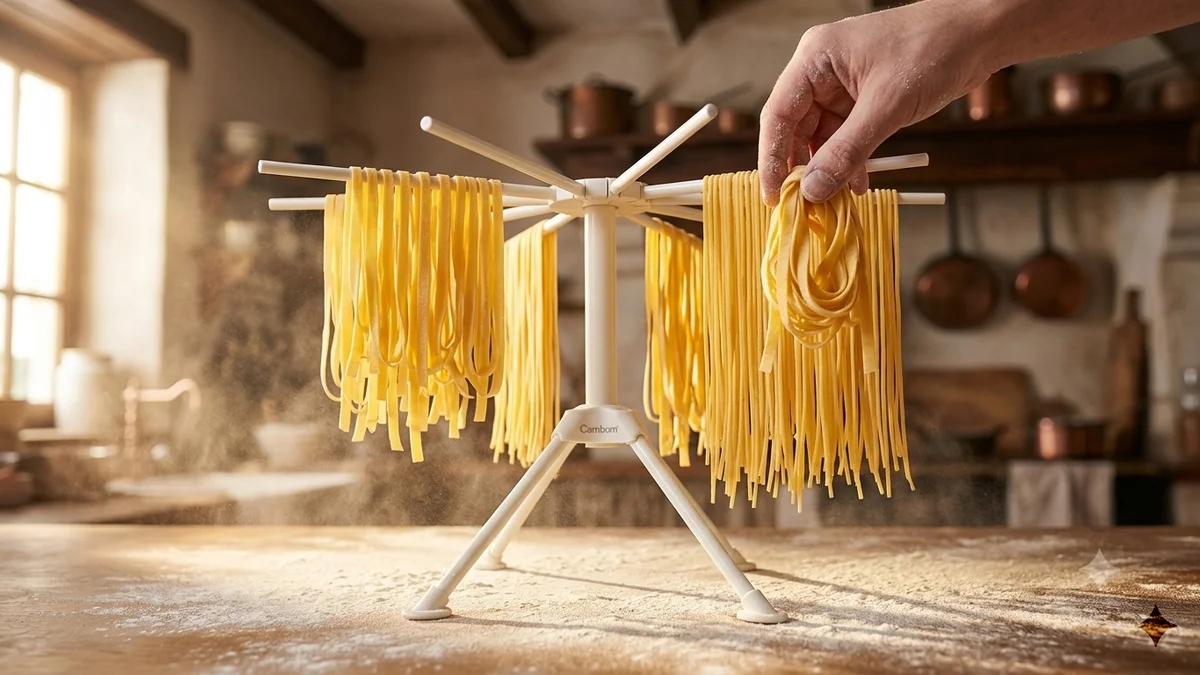
Step 3: Hang on a drying rack in dry air Drape long pasta over the arms of a rack, spacing strands so air reaches every side. King Arthur suggests draping long noodles “on a rack, hanger, or chair back” for even air circulation. A pasta drying rack holds the strands apart for you, the one job a sheet pan can’t do. Keep the rack in a dry, ventilated spot.
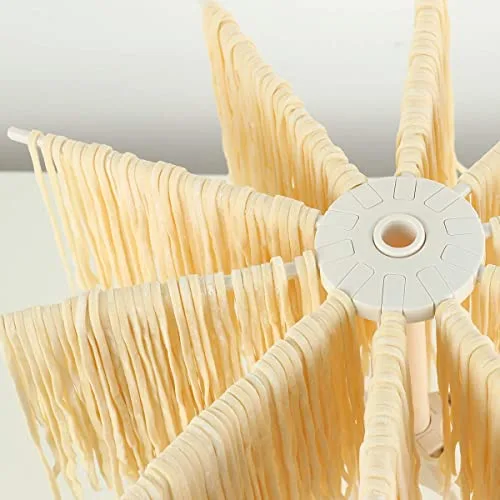
Step 4: Air dry for the time your purpose needs Match the drying time to what you plan to do with the pasta. Cooking tonight takes a short rest. Shelf storage takes overnight or longer. The chart below maps each case to a source.
Step 5: Store it right Pasta dried until brittle goes in an airtight container. Pasta that is only surface-dry goes in the fridge or freezer, never the pantry. King Arthur is blunt about the risk: pasta must be “completely dried (otherwise it may become moldy during storage).”
How Long Should You Dry Fresh Pasta?
It depends on your goal, from a 15-minute rest for tonight’s dinner to overnight or longer for the pantry. Drying does two jobs: it firms the surface so strands don’t stick in the pot, and it pulls out enough water for long storage. The chart below maps each purpose to a time, a target texture, and the source behind it.
| Purpose | Dry time | What you want | How to store after | Source |
|---|---|---|---|---|
| Rest before cooking soon | About 15 min to a few hours | Dry to the touch but still pliable | Cook within about 1 hour of cutting | ATK; King Arthur |
| Air dry, then store | Overnight to 24 hours | Leathery, then fully dry to the touch | Airtight container | King Arthur |
| Freeze instead of drying | About 15 min pre-freeze on the sheet | Pieces no longer stick to each other or the pan | Airtight bag, freezer | King Arthur |
| Fully dried, shelf-stable | Up to 24 hours depending on humidity | Completely dry; brittle | Airtight container, cool and dark | King Arthur |
Two cues beat the clock. King Arthur’s pasta-machine guide draws the line clearly: to cook soon, let pasta “dry at room temperature for a few hours until it feels dry to the touch but still pliable”; to store, “allow it to dry completely, which can take up to 24 hours, depending on humidity.” Pasta you can still bend is leathery and belongs in the fridge or freezer. Pasta that snaps cleanly holds on the shelf. Thicker shapes and higher humidity both push every time in this chart longer.
The cooking time changes with how you stored it, too. King Arthur’s timing test puts fresh pasta with no drying at 2 to 3 minutes, frozen fresh pasta at 3 to 5 minutes, and air-dried fresh pasta at 4 to 7 minutes, all depending on size.
How Long Does Dried or Frozen Pasta Keep?
Storage life splits sharply by method, and the numbers come straight from the test kitchens. The table below is the shelf-life reference.
| Storage method | Keeps for | Conditions | Source |
|---|---|---|---|
| Fully dried, airtight, room temperature | One to two months | Pasta dried completely first | King Arthur |
| Frozen (King Arthur method) | Up to 3 months | Pre-frozen on the sheet, then bagged airtight | King Arthur |
| Frozen (ATK method) | Up to 2 weeks | Frozen firm on the sheet, then bagged | ATK |
The two freezer figures differ because the sources set different limits, not because one is wrong. Treat 2 weeks as the conservative window and 3 months as the outer limit for well-sealed, airtight bags. For food safety, King Arthur recommends drying eggless dough rather than egg dough for full shelf storage, “since it will be left out to dry for an extended period of time.” Egg pasta is better off frozen.
Can You Freeze Fresh Pasta Instead of Drying It?
Yes, and freezing is the safest long-term option for egg pasta. Drying egg pasta to full shelf stability at home is hard to do safely, so most cooks dry the surface and then freeze. Freezing also sidesteps the cracking problem.
- Toss the pasta in flour or a light dusting of cornstarch so strands stay separate.
- Shape long pasta into loose nests or portion short shapes onto a floured tray.
- Pre-freeze on the tray. King Arthur freezes the sheet “for about 15 minutes, or until the individual pieces aren’t sticking to each other or the pan.” ATK freezes until the pasta is firm.
- Move the semi-frozen pasta to airtight bags and return them to the freezer. King Arthur labels, dates, and stores them “for up to 3 months.”
- Cook straight from frozen. Skip thawing, or the surface turns sticky again.
A vacuum sealer helps for longer freezer storage. The flour coating keeps the strands from welding together in the bag.
Do You Need a Pasta Drying Rack?
You can dry pasta without one, but a rack solves the exact problem that makes long pasta stick: it holds strands apart while air reaches every side. King Arthur lists the common improvisations itself, draping long noodles “on a rack, hanger, or chair back” so air can circulate. The rack is the version built for the job.
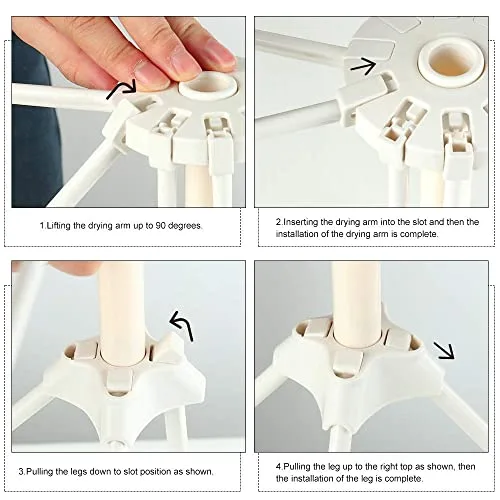
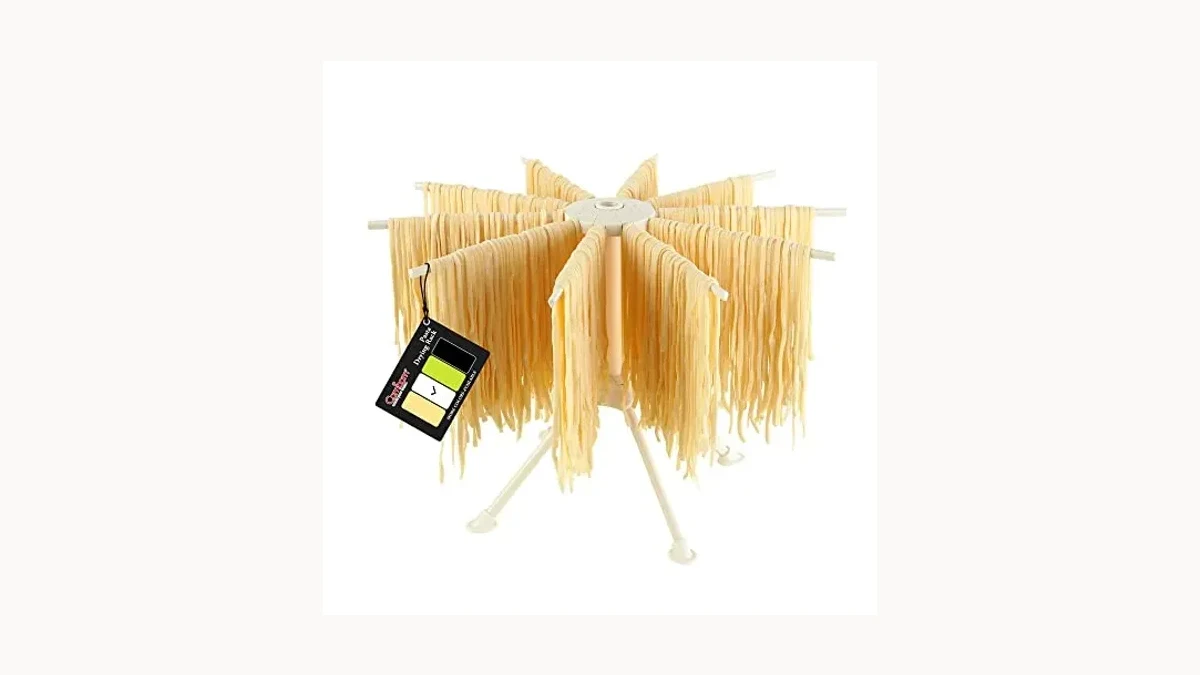
A dedicated rack holds spaghetti, linguine, fettuccine, and tagliatelle off every surface so they dry straight rather than weld flat. The Cambom Collapsible Pasta Drying Rack has 10 lengthened arms for full-batch capacity and 4 rubber anti-slip feet that hold it in place while you load wet, heavy strands.
| Feature | Cambom rack | Sheet pan or improvised |
|---|---|---|
| Keeps strands apart | 10 lengthened arms hold each strand off the surface | Strands crowd and touch as they settle |
| Dries every side | Air reaches all around each strand | Underside sits damp against the pan |
| Strands dry straight | Hung strands dry straight | Nests and draped strands curl |
| Stays put when loaded | 4 rubber anti-slip feet | Slides on the counter |
| Setup and storage | Tool-free assembly, folds flat to about 7.8 by 3.5 inches | Takes up a drawer or hangs in the way |
| Cleaning | Dishwasher safe on the top rack | Hand wash the pan |
How Do You Stop Dried Pasta From Curling or Cracking?
Pasta curls or cracks when the outside dries faster than the inside, so the shrinking surface deforms while the core stays damp. The industrial-drying literature explains the same physics. Italian Food Tech reports that drying lowers moisture from about 31 percent down to 12 to 13 percent, and that the dough shifts from plastic to elastic as moisture falls to roughly 22 to 18 percent. Push it too fast and “the pasta will crack, giving the product a poor appearance and very low mechanical strength”; go too slow and “it tends to spoil or become moldy.” Controlled, even drying is the whole game.
At home, you control it with air and time, not a dryer cabinet:
- Dry in still air at moderate humidity, away from a draft or a fan.
- Space strands so none dry ahead of their neighbors.
- For thick strands, rest them a couple of hours partway through so the inside and outside moisture even out.
- Turn long strands once on the rack so the bend point doesn’t sit against the same rod the whole time.
For flat, straight pasta in storage, dry it to leathery on the rack, then lay the strands flat on a screen to finish. The rack handles the first, stickiest stage.
How We Sourced These Numbers
Every time, temperature, and shelf-life figure in this guide comes from a named test kitchen or a published drying reference, not our own marketing. Here is each source and what it covered, with the honest limits.
- King Arthur Baking, How to make homemade pasta: the air-dry window of 12 to 24 hours, the about-15-minute freezer pre-freeze, the up-to-3-months frozen storage limit, and cooking times by storage method (fresh 2 to 3 min, frozen 3 to 5 min, air-dried 4 to 7 min). These are authority guidelines, not stopwatch averages across many recipes.
- King Arthur Baking, How to dry pasta: “dry pasta overnight or up to 24 hours,” the one-to-two-month room-temperature shelf life for fully dried pasta, the eggless-dough food-safety note, and the warning that pasta must be completely dry or it can mold.
- King Arthur Baking, How to use a pasta machine: the split between a few hours’ rest “until it feels dry to the touch but still pliable” for cooking soon versus a full dry “up to 24 hours, depending on humidity” for storage, plus the single-layer and rack/hanger/chair-back drying methods.
- King Arthur Baking, Fresh Pasta Recipe and What is semolina flour: semolina as the anti-stick dusting flour, why its coarse texture and high protein help.
- America’s Test Kitchen, Fresh Pasta: the about-15-minute rest until firm at the edges, the advice to cook cut noodles within 1 hour, the over-flouring warning, and the freeze-firm-then-bag-for-up-to-2-weeks method. The over-flouring caution is an editorial finding, not a measured test.
- Italian Food Tech, Drying of pasta: the moisture-content mechanics (about 31 percent down to 12 to 13 percent; plastic-to-elastic at 22 to 18 percent) and the crack-versus-mold trade-off. These describe industrial drying, so the percentages are not a home humidity target.
Two honest gaps. No source we could verify gives a home relative-humidity percentage or a room-temperature figure for air-drying, so we describe humidity as a lever rather than a number. The moisture percentages above are for commercial dryers, not your kitchen counter. Where a figure was only a marketing or aggregator claim we could not trace to a real test, we left it out.
Frequently Asked Questions
How long does fresh pasta take to dry? It depends on your goal. For cooking the same day, a short rest of about 15 minutes to a few hours firms the surface so strands don’t stick in the pot; America’s Test Kitchen rests its rolled sheets uncovered until firm at the edges, about 15 minutes. For storage, King Arthur Baking says to dry pasta overnight or up to 24 hours, and notes the full dry can take up to 24 hours depending on humidity. Lower humidity speeds every stage.
Can you freeze fresh pasta instead of drying it? Yes, and freezing is the safest long-term option for egg pasta. King Arthur Baking pre-freezes cut pasta on the baking sheet for about 15 minutes, until the pieces no longer stick to each other or the pan, then bags it and freezes for up to 3 months. America’s Test Kitchen freezes pasta on the sheet until firm, then bags it for up to 2 weeks. Cook frozen pasta straight from the freezer; do not thaw it, or it turns sticky.
Why does fresh pasta stick together when drying? Wet pasta sticks because its surface starch is still tacky, so any two strands that touch fuse as they dry. The fix is to flour the strands and separate them before they touch, then dry them with space between them. King Arthur Baking dusts cut noodles with semolina and spreads them in a single layer without overlapping, or coils them into loose nests. High room humidity keeps the surface tacky for longer and makes sticking worse.
Do you need a pasta drying rack to dry fresh pasta? No, but a rack makes it far easier and stops long pasta from sticking. King Arthur Baking suggests draping long noodles on a rack, hanger, or chair back for even air circulation, or laying short cuts in a single layer on a floured sheet. A rack holds strands apart so air reaches every side, which dries them evenly and keeps them straighter.
Should you dry fresh pasta with flour or cornstarch? Both work. Semolina is the classic choice: King Arthur Baking tosses cut noodles on a semolina-dusted sheet, and explains that semolina’s coarse texture helps keep dough from sticking while its high protein makes the dough less sticky and more elastic. A very light dusting of cornstarch also keeps strands separate. America’s Test Kitchen warns against over-flouring, since excess flour can make the dough snap back as you roll it.
Why does dried homemade pasta curl or crack instead of staying straight? Pasta cracks when the outside dries much faster than the inside, so the shrinking surface deforms. Italian Food Tech, describing industrial drying, says pasta dried too quickly cracks and ends up with very low strength, while pasta dried too slowly can spoil or mold, which is why humidity has to be controlled. At home, dry long pasta in still air rather than under a fan, and rest thick strands partway through so the inside and outside moisture even out.
Ready to Dry a Full Batch?
The Cambom Collapsible Pasta Drying Rack holds a full batch on 10 lengthened arms, grips the counter with 4 rubber anti-slip feet, assembles with no tools, folds flat to about 7.8 by 3.5 inches for storage, and is dishwasher safe on the top rack. Buy it on Amazon →
Reviewed by the Cambom Kitchen Team. Updated June 26, 2026.