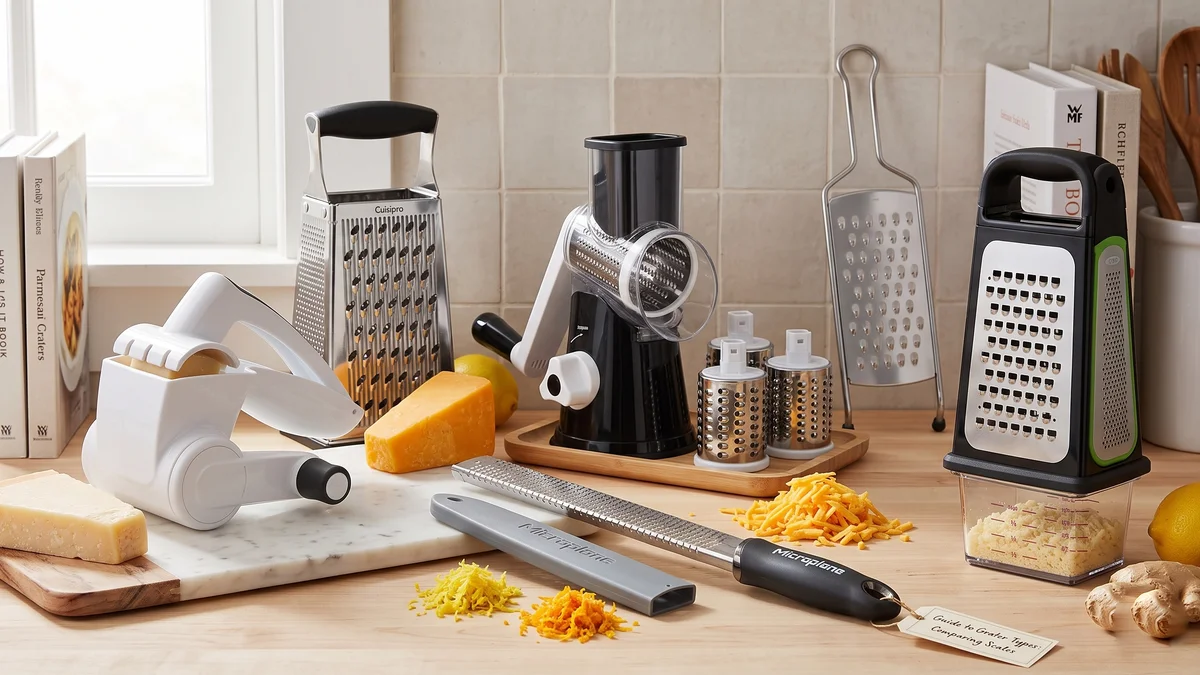

To clean a rotary cheese grater, disassemble it, rinse the parts right after use, push the cleaning brush through the drum holes from the inside to free trapped cheese, then air-dry completely before reassembling. Cleaning immediately, before cheese dries, is the single most effective step. If cheese has already stuck on, The Kitchn reports that rubbing a cut lemon over the blades cleared a grater “in just about a minute.” The Cambom Rotary Cheese Grater is also dishwasher-safe on the top rack for an even easier option.
A rotary cheese grater makes grating fast, but its drum-and-hopper design traps cheese in places a sponge cannot reach. Proper cleaning keeps it hygienic, protects the blades from dulling, and extends the tool’s life. The methods and timings below come from manufacturer care pages and independent kitchen sources, each linked so you can check the original.
Quick reference: which cleaning method to use when
The fastest clean is rarely the deepest. Use this table to match the method to how dirty the grater is. Every figure traces to a named source listed in How we sourced these numbers.
| Method | When to use | Time | Best for | Source |
|---|---|---|---|---|
| Tap and rinse | Right after every use | Seconds | Fresh, soft cheese residue | Microplane |
| Cleaning brush | Cheese stuck in the drum holes | 1 to 2 min | Trapped shreds in the drum | CulinaryLore |
| Lemon (plus salt) | Stuck-on, dried cheese | ~1 min | Cheese baked onto the blades | The Kitchn |
| Baking-soda paste | Stubborn, hardened residue | Apply, scrub, rinse | The toughest caked-on cheese | Qualitative (no verified ratio) |
| Warm soapy soak | Weekly or heavy use | Loosen, then brush | Loosening everything at once | CulinaryLore |
| Dishwasher (top rack) | Hands-off deep clean | 1 cycle | Dishwasher-safe parts only | Microplane; Zyliss |
One honesty note: we found no manufacturer or authority page that publishes a grater-specific baking-soda paste ratio or a verified soak time. So we keep the baking-soda steps qualitative rather than invent numbers. The timings for the lemon trick and the “tap and rinse” routine come straight from the sources linked above.
How do I clean a rotary cheese grater step by step?
Disassemble the grater, rinse the parts, brush the drum from the inside out, treat any stubborn residue, then air-dry completely. A routine clean takes about two minutes.
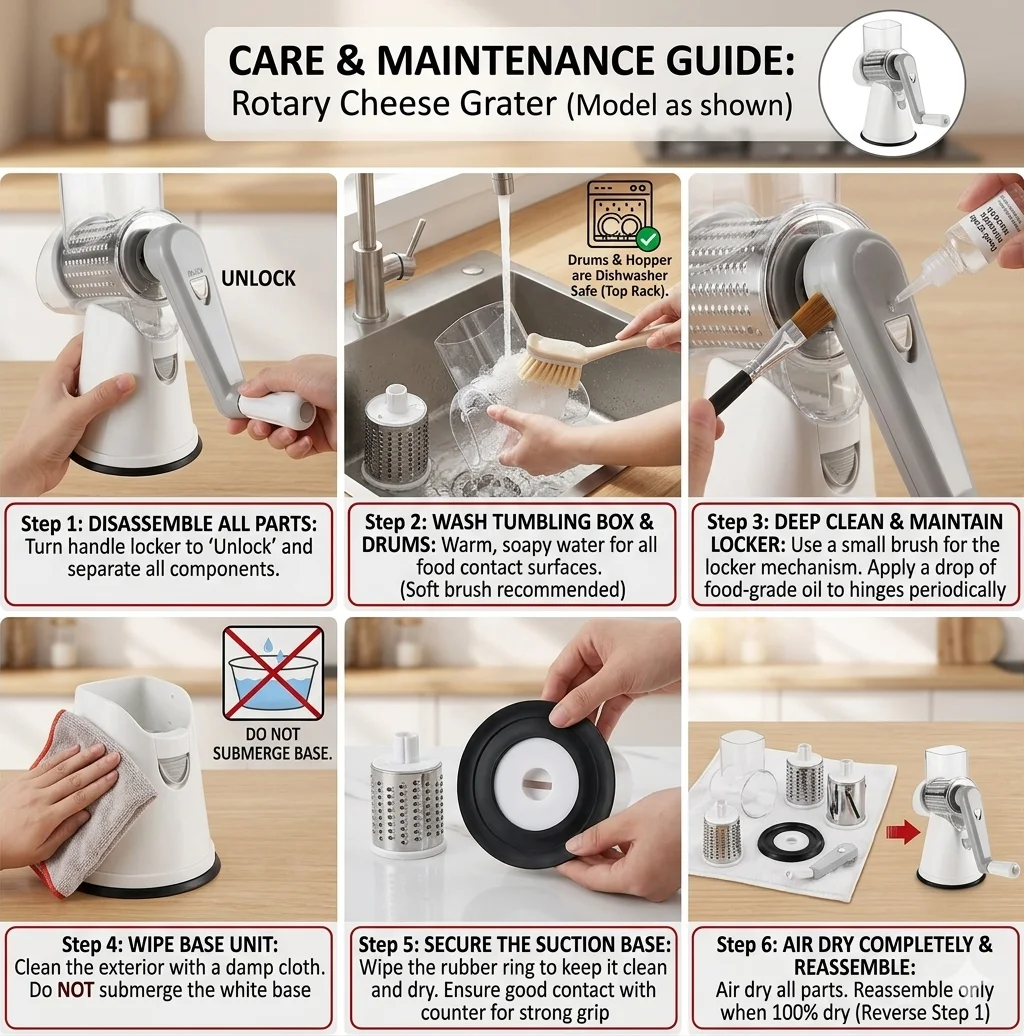
Step 1, disassemble: Take the grater apart so the drum, hopper, handle, and base can each be cleaned individually. Removing the drum is the single most important step for reaching trapped cheese.
Step 2, rinse right after use: Microplane advises cleaning the grater straight after use: “tap off the food of the blades on a cutting board or any other working space,” then rinse and drip dry. A quick rinse clears most fresh residue in seconds. CulinaryLore makes one counterintuitive point here: use cold water, not hot. “Don’t use hot water, use cold!” Hot water softens the cheese fats and makes them stickier, while cold water rinses them off.
Step 3, brush out stuck cheese: Use the included cleaning brush, or a soft-bristled dish brush, to push trapped cheese out through the drum holes from the inside. CulinaryLore calls a dish brush “the best choice” for a grater’s irregular surfaces, and advises rubbing “in the direction of the cutting blades, not against them” (it notes this is not critical, but it spares your brush). The Daily Meal agrees: follow the blade pattern to avoid ruining your sponge.
Step 4, treat stubborn residue: For cheese that has already dried on, reach for a lemon. The Kitchn rubs the cut end of a lemon over the blades and reports that “in just about a minute, the whole thing was free of cheese.” For extra-stubborn residue, dip the lemon in salt first, since salt acts as a natural abrasive, then scrub. A baking-soda-and-water paste also lifts hardened cheese.
Step 5, dishwasher or final rinse: Place the disassembled, dishwasher-safe parts on the top rack, or give everything a final rinse by hand. See the dishwasher section below for what the manufacturers actually say.
Step 6, air-dry and reassemble: Dry every part completely before reassembling and storing, to prevent moisture, odor, and bacteria buildup.
How do I remove stuck cheese from the drum?
Push the cleaning brush through the drum holes from the inside out while rinsing, which releases trapped shreds without bending the blades. For residue that has already hardened, here is what the sources back:
- Lemon scrub. Rub the cut end of a lemon over the blades. The Kitchn cleared a grater of cheese this way “in just about a minute.” For tougher residue, dip the lemon in salt and scrub.
- Warm soapy soak. Soak the drum to soften dried cheese, then brush. Warm, soapy water loosens residue before you ever touch the brush.
- Baking-soda paste. Apply to the stuck residue, scrub gently with a soft brush, then rinse. We deliberately do not quote a paste ratio or soak time, because no authority page we could open publishes one for graters.
- Plastic scraper. Lift caked-on debris without scratching the drum or your hands.
The real fix is timing. Cheese rinsed off within a few minutes almost never sticks. The longer it sits, the more its oils harden into the holes, which is exactly why Microplane tells you to clean straight after grating.
Can I put a rotary cheese grater in the dishwasher?
Yes. The Cambom Rotary Cheese Grater is dishwasher-safe on the top rack, and its drums and parts detach so water reaches every surface. Its body is BPA-free, food-grade plastic built for repeated cleaning.
Major grater makers say the same about their tools, with one shared caveat. Microplane states plainly that “all Microplane graters are dishwasher safe,” but still recommends hand washing to keep the blades sharp. Zyliss puts it this way: “All Zyliss products are dishwasher safe unless otherwise stated. However, we do recommend hand washing components with blades to maintain sharpness.” So the dishwasher is safe for the body and parts, while a quick hand wash protects the cutting edges over the long run.
| Factor | Rotary grater guidance | Source |
|---|---|---|
| Dishwasher rack | Top rack only (lower heat exposure) | Cambom care guidance |
| Dishwasher safety, other brands | Microplane and Zyliss confirm dishwasher safe | Microplane; Zyliss |
| Blade longevity | Hand wash bladed parts to keep edges sharp | Microplane; Zyliss |
| Cambom material | BPA-free, food-grade plastic | Cambom |
| Detachable parts | Drum and hopper detach for full-surface cleaning | Cambom |
| Risk to avoid | High-heat bottom rack can warp plastic on some brands | Cambom care guidance |
For any other brand, check the care instructions first. “Dishwasher safe” is common across graters but not universal, and high heat can warp some plastic components.
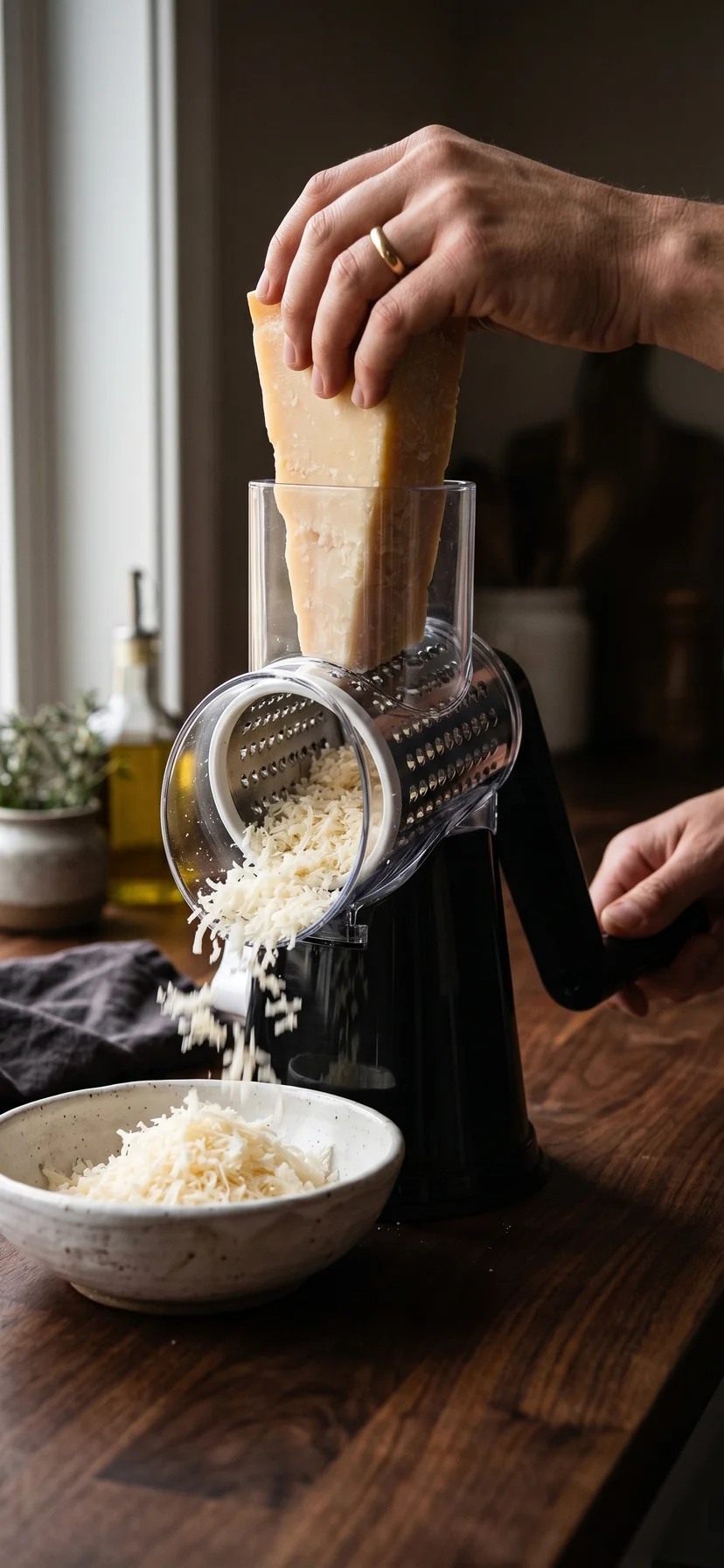
Cleaning a Zyliss, OXO, or Cambom rotary grater
The routine above fits any rotary grater. These are the model-specific answers for the three brands readers ask about most, each taken from the maker’s own page.
How do you clean a Zyliss rotary cheese grater?
Separate it first. Zyliss’s product page for the Classic says the drum and handle “easily separate, making cleanup quick and hassle-free,” and its care instructions list the grater as dishwasher safe. So pop the drum out of the frame, rinse both parts under cold water, and brush the drum from the inside out. Zyliss’s own FAQ adds the caveat worth heeding: hand wash the bladed components to maintain sharpness. The Classic also carries a 5-year warranty.
How do you clean an OXO rotary cheese grater?
OXO’s product page lists its rotary grater as dishwasher safe, built around a large barrel with bi-directional stainless steel blades. The routine is the standard one: rinse the barrel right after grating, push a brush through it from the inside, then hand wash or run the parts through the dishwasher.
How do you take apart and clean the Cambom rotary grater?
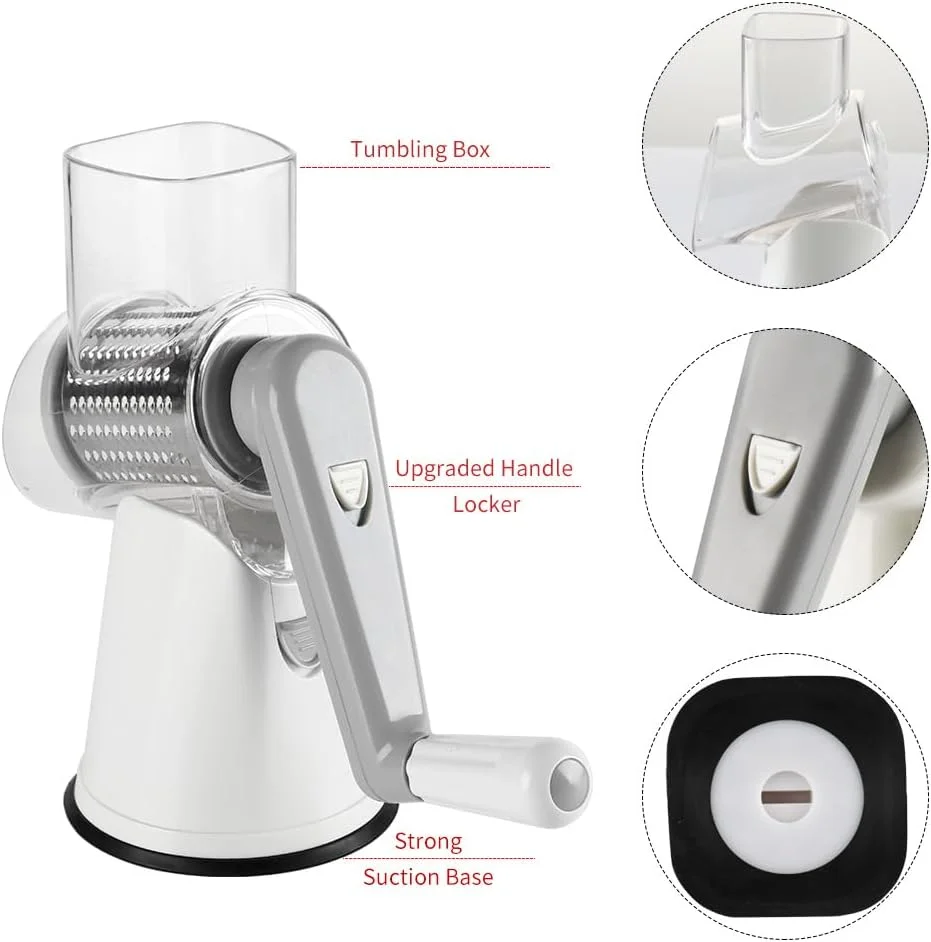
Pull the drum out of the hopper and detach the suction base so each part washes separately; the parts are designed to come apart so water reaches every surface. Cambom’s own listing guidance for the rotary is that it is dishwasher safe on the top rack, with hand washing equally acceptable. The separated parts store flat in a drawer, so there is no need to reassemble a damp grater; keeping it apart until fully dry is also the storage habit that prevents trapped moisture.
How do I stop cheese from sticking in the first place?
Prevention beats scrubbing. Three habits keep a rotary grater clean:
- Clean immediately. Rinse before residue hardens. This is the biggest single factor. Microplane frames it as a habit: tap the food off the blades straight after grating, then rinse and drip dry.
- Chill soft cheese. Firm up mozzarella or other soft cheeses in the freezer for 10 to 15 minutes before grating, so they shred cleanly instead of smearing.
- Dry fully before storing. Trapped moisture invites odor and bacteria and helps residue cake on.
Hard aged cheeses such as Parmesan and Romano stick the least, while very soft cheeses stick the most.
Are natural cleaning solutions effective?
Yes. For tougher or smelly residue, household solutions work well and are gentle on materials. The lemon trick in particular has a real, timed result behind it.
- Lemon, then lemon and salt. Rub the cut end of a lemon over the blades. The Kitchn cleared a grater “in just about a minute.” If it needs more, “dip the lemon in a bowl of salt” and scrub. The citric acid breaks down residue and the salt adds gentle grit.
- White-vinegar soak. Mix equal parts water and white vinegar, then soak or wipe down to dissolve mineral deposits and cheese residue before brushing and rinsing.
- Baking-soda paste. For tough stains, apply a paste, scrub, and rinse. We keep this qualitative on purpose: no manufacturer or authority page we could open lists a grater-specific paste ratio or soak time, so we will not put a fabricated number on it.
- Baking-soda soak (deodorizing). Dissolve baking soda in warm water, soak, then rinse and dry. The same caveat applies to the exact ratio.
A word on soaking handled graters: The Daily Meal cautions, “we don’t recommend soaking, as water can make its way into the handle.” For a rotary grater, soak the detached drum and parts, and keep the handle assembly out of a long bath.
Do dishwashers dull the blades, and when is a grater done?
Sharpness wears out, and the sources are unusually blunt about it. Serious Eats’ FAQ answer reads: “Any cutting edge can dull with time, and, unfortunately, cheese graters can’t be sharpened. When you notice that it’s getting harder and harder to use, it’s done.” Its dishwasher answer carries the same warning: many graters can go in the dishwasher, but cycles “can dull the teeth more rapidly,” so hand washing is the safer habit.
Wirecutter’s long-term testing backs both points. Cuisipro told Wirecutter that running its graters through the dishwasher regularly can dull the blades, and a zester that started out solid in Wirecutter’s testing was already dull after two years of use.
The replacement signals are easy to spot: you press harder than you used to, hard cheese comes out powdery instead of fluffy, and soft cheese smears where it once shredded. When that happens, no cleaning method brings the edge back; our best rotary cheese grater comparison covers what to replace it with.
How We Sourced These Numbers
We pulled every figure and quote in this guide from manufacturer care pages and named kitchen publications, not our own marketing. Here is each source, what it covers, and the honest limits.
-
Microplane, Care & Handling Tips: the maker’s own statement that “all Microplane graters are dishwasher safe,” its hand-wash recommendation to keep blades sharp, and its clean-immediately routine (“tap off the food of the blades,” then rinse and drip dry). This is authority guidance, not a timed lab test.
-
Zyliss, Frequently Asked Questions: the statement that “all Zyliss products are dishwasher safe unless otherwise stated,” plus the hand-wash advice for bladed components. Manufacturer guidance.
-
The Kitchn, the lemon trick (republished via AOL): the “about a minute” lemon result and the lemon-plus-salt step for stubborn cheese. This is an editorial claim from one writer’s test, not a controlled time trial, and we cite it via the AOL republication because the original URL was not reachable.
-
CulinaryLore, The Best Way to Clean a Cheese Grater: the cold-water-over-hot advice, the dish brush as the best tool, and brushing in the direction of the blades. Editorial, not a lab test.
-
The Daily Meal, Is There A Best Way To Clean A Microplane Zester/Grater?: the warning against soaking a handled grater and the “follow the blade pattern” brushing tip. The blade-pattern point is sourced to user reports, so treat it as a community tip rather than a measured finding.
-
Zyliss, Classic Cheese Grater product page: the detachable drum and handle (“easily separate”), the dishwasher-safe care instruction, and the 5-year warranty. Manufacturer guidance.
-
OXO, Rotary Grater product page: the dishwasher-safe listing and the bi-directional stainless blade design. Manufacturer guidance.
-
Serious Eats, the cheese-grater roundup: the “cheese graters can’t be sharpened” verdict and the warning that dishwasher cycles can dull grater teeth more rapidly. Editorial FAQ.
-
NYT Wirecutter, The Best Grater: Cuisipro’s statement to Wirecutter that regular dishwasher runs can dull its blades, and the zester that was already dull after two years in Wirecutter’s long-term testing.
-
Cambom, the rotary grater’s Amazon listing: the top-rack dishwasher guidance, hand washing as an acceptable alternative, and flat drawer storage of the separated parts. Manufacturer guidance.
Where a number was a marketing claim or an unverified snippet we could not confirm on a real page, we left it out. That includes specific baking-soda paste ratios and soak times for graters, none of which we could verify against a primary source, so we kept those steps qualitative.
Safety tips before you clean
Always grasp the grater firmly and keep your fingers off the drum blades. Consider cut-resistant gloves when inspecting or cleaning the blades, keep your hands dry for a firm grip, and never run a finger along a cutting edge.
Tools and supplies for cleaning
Most cleans need nothing more than water and the included brush. Keep these on hand for deeper jobs:
| Tool / Supply | Use |
|---|---|
| Included cleaning brush | Pushing cheese out of the drum holes |
| Dish brush | Best tool for a grater’s irregular surfaces (CulinaryLore) |
| Dish soap + warm water | General cleaning and soaking |
| Lemon (and salt) | Clearing stuck-on cheese in about a minute (The Kitchn) |
| Baking soda | Paste for stubborn residue; soak for odor |
| White vinegar | Dissolving mineral and cheese deposits |
| Microfiber cloth | Drying and polishing |
The Cambom Rotary Cheese Grater is BPA-free, dishwasher-safe (top rack), and ships with a cleaning brush. All three drums detach in seconds, and it's Amazon's #1 Best Seller in Cheese Graters, with 6,000+ bought in the past month.
View on Amazon →A clean drum also lets you switch ingredients without flavour carry-over. Our list of what else you can grate with a rotary grater covers chocolate, nuts, carrots and 12 more uses beyond cheese.
Frequently Asked Questions
How do I remove stuck cheese from a rotary cheese grater?
Rinse the drum right after use, then push the cleaning brush through the drum holes from the inside to free trapped cheese, brushing in the direction the holes open. For stuck-on cheese, The Kitchn reports that rubbing the cut end of a lemon over the blades cleared a grater of cheese in about a minute. CulinaryLore recommends cold water over hot, since hot water makes cheese stickier. Cleaning immediately is the single best way to stop cheese from sticking in the first place.
Is a rotary cheese grater dishwasher safe?
The Cambom Rotary Cheese Grater is dishwasher-safe on the top rack, its drums and parts detach for easy cleaning, and the body is BPA-free, food-grade plastic. Many other brands agree: Microplane states all its graters are dishwasher safe, and Zyliss says all its products are dishwasher safe unless otherwise stated. Both, though, recommend hand washing bladed parts to keep the edges sharp. Always check your brand’s care instructions, since high heat can warp some plastic parts.
How do I prevent cheese from sticking to a rotary grater?
Clean it right after each use before residue hardens. Microplane advises tapping food off the blades straight after grating, then rinsing and drip drying. Chill soft cheeses like mozzarella in the freezer for 10 to 15 minutes before grating, and dry the drum fully before storing. Hard aged cheeses such as Parmesan stick the least.
Can you soak a rotary cheese grater?
You can soak the drum and parts in warm, soapy water to loosen dried cheese before brushing. But take care with the handle: The Daily Meal warns against soaking a handled grater because water can work its way into the handle, and recommends a gentle tap, a rinse, and brushing instead. For deodorizing, dissolve baking soda in warm water, soak, then rinse and dry thoroughly. Check the manufacturer’s instructions before submerging any part.
How often should I clean my rotary cheese grater?
After every use. Microplane recommends cleaning straight after using the grater by tapping off the food, rinsing, and drip drying. Cleaning immediately prevents cheese oils and residue from hardening on the drum, which is far harder to remove once dried and can dull the blades over time.
What is the best way to deep clean a rotary cheese grater?
Disassemble it, soak the parts in warm soapy water to loosen residue, then brush the drum from the inside out. CulinaryLore calls a dish brush the best tool for a grater’s irregular surfaces and advises brushing in the same direction as the blades. For tougher residue, a lemon-and-salt scrub or a baking-soda paste handles baked-on cheese. Rinse and air-dry completely.
Do dishwashers dull cheese grater blades?
They can. Serious Eats warns that dishwasher cycles can dull grater teeth more rapidly, and Cuisipro told Wirecutter that regular dishwasher runs can dull its blades. That is why Microplane and Zyliss, both of which call their graters dishwasher safe, still recommend hand washing the bladed parts, and Cambom lists hand washing as an equally acceptable option. Once a grater dulls it cannot be sharpened; Serious Eats’ rule is that when it gets harder and harder to use, it’s done.
Reviewed by the Cambom Kitchen Team. Updated August 23, 2026.