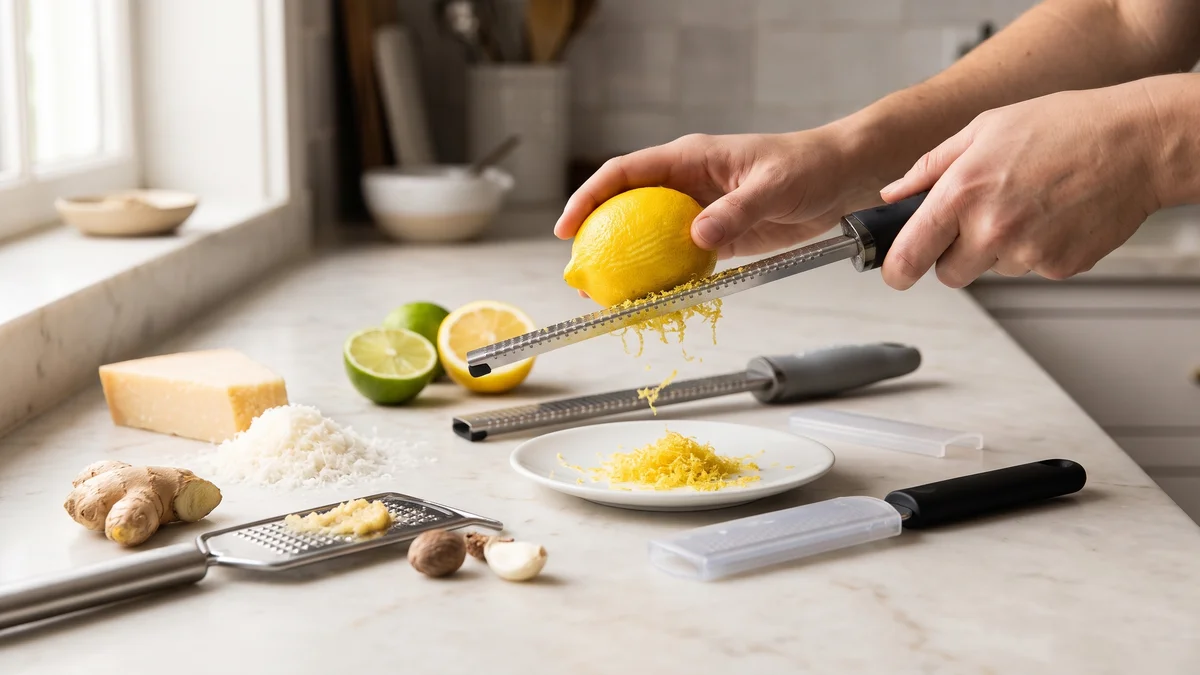
The best zester for most kitchens is the Microplane Premium Classic ↗: its razor-sharp photo-etched teeth lift citrus zest without the bitter white pith, turn Parmesan into fluffy snow, and stay sharp for years. The Microplane Classic puts the same blade on a cheaper, harder handle, and if ginger and garlic are your main jobs, the wider Microplane Gourmet Fine paddle is the better tool.
This is the Cambom Kitchen Team’s comparison of the best zesters and rasp graters, ranked on how cleanly each one zests citrus, how it handles Parmesan, ginger, garlic, and nutmeg, how long it stays sharp, and how easy it is to hold, clean, and store.
The 5 best zesters compared
Product names link to the current Amazon listing.
| Rank | Zester | Price (November 6, 2026)* | Style | Grating surfaces | Blade cover | Non-slip base | Weight |
|---|---|---|---|---|---|---|---|
| #1 · Our pick | Microplane Premium Classic ↗ Best overall | $18.99 | Rasp | 1 fine, photo-etched | Yes | Rubber feet | 0.24 lb |
| #2 | Microplane Classic ↗ Best value | $12.99 | Rasp | 1 fine, photo-etched | Not stated | No | 0.13 lb |
| #3 | Microplane Gourmet Fine ↗ Best for ginger and garlic | $20.95 | Paddle | 1 fine, wider face | Not stated | Not stated | 0.22 lb |
| #4 | OXO Good Grips Etched Zester ↗ Gentlest on citrus | $12.97 | Rasp, offset | 1 fine, etched | Yes | Non-slip foot | 0.31 lb |
| #5 | Cambom Zester and Grater Set of 3 ↗ Best set with covers | $9.99 | 3 flat graters | Fine, coarse, extra coarse | Yes, on each | Anti-skid bars | 0.44 lb (set) |
*Prices as of November 6, 2026 and change often; check the live listing. Styles, covers, bases, and weights come from each product’s current Amazon listing data; “not stated” means the listing does not say.
Zester, rasp, or grater: which tool do you need?
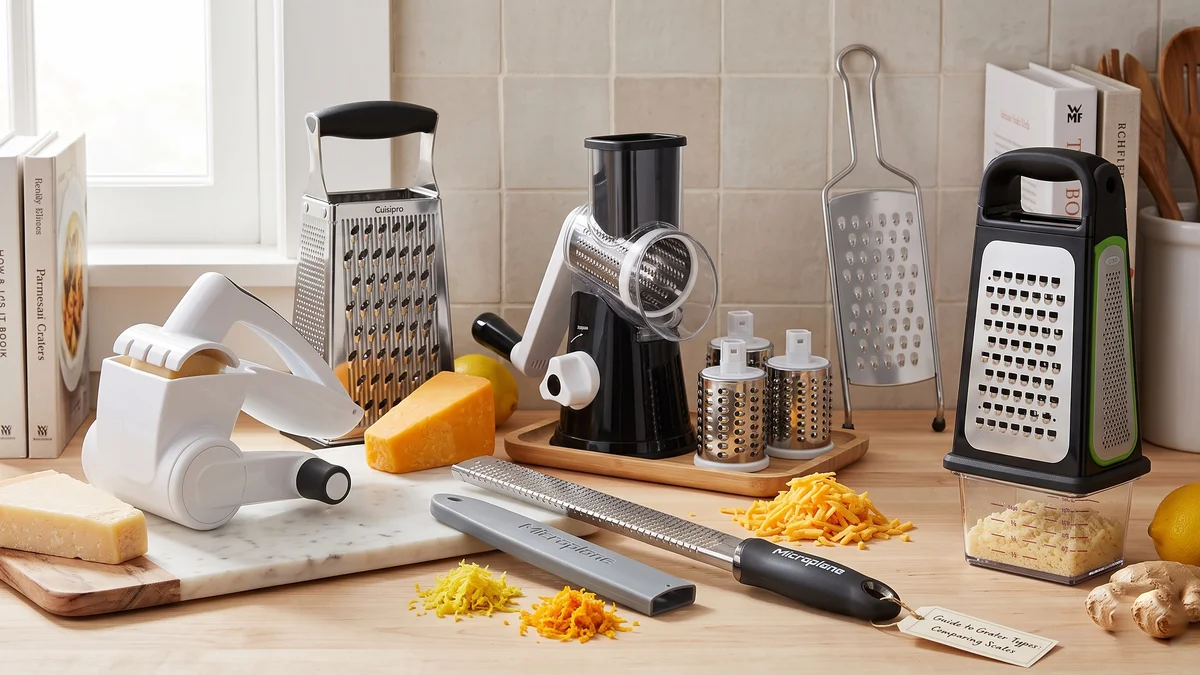
The word “zester” covers three different tools, and only one of them does everything people expect.
| Tool | What it makes | Best for | Not for |
|---|---|---|---|
| Rasp zester (long, narrow) | Fine, fluffy zest and Parmesan snow | Citrus zest, hard cheese, nutmeg, garlic, chocolate | Shredding cheddar or vegetables |
| Paddle fine grater (wider) | The same fine texture over a bigger surface | Ginger, garlic, and larger amounts of hard cheese | Tight spots on small citrus |
| Traditional citrus zester (short head) | Thin ribbons of peel | Cocktail and dessert garnish | Fine zest for baking, any cheese |
| Coarse grater | Shreds | Cheddar, chocolate curls, carrots, zucchini | Zest: large teeth catch the pith |
For most cooks the answer is a fine rasp. It is the tool behind “zest one lemon” in a recipe, it grates Parmesan finer than any box grater, and it doubles for garlic, ginger, and nutmeg. Add a coarse grater only if you also shred soft cheese and vegetables, which is where a set like ours earns its place.
The picks
1. Microplane Premium Classic: Best Overall
The rasp every other zester is measured against. Its photo-etched teeth are sharp enough to shave only the colored layer off a lemon, leaving the pith behind, and they turn a wedge of Parmesan into weightless snow. It also handles nutmeg, garlic, and ginger with little effort, and the teeth continue around the edges of the blade, so the corners grate instead of skating. The soft, grippy handle and rubber feet let it rest across a bowl, and the blade keeps its edge through years of regular use.

Pros:
- Clean, pith-free zest and fluffy Parmesan from one blade.
- Teeth wrap the blade edges and stay sharp long-term.
- Soft handle, rubber feet, and a blade cover included.
- Made in the USA from surgical-grade stainless steel, per the listing.
Cons:
- The narrow underside is fiddly to clean; use a brush.
- A minority of owners report the handle separating from the blade over time.
- Too slow for shredding cheese by the cup.
We link the grey version because the black one was nearly out of stock when we checked; the blade and handle are the same.
2. Microplane Classic: Best Value
The same photo-etched blade as the Premium Classic, mounted on a simpler handle for less money. It zests and grates just as well, and it stays as sharp at the end of a job as at the start. What you give up is comfort: the handle is hard, slick plastic rather than soft grip, and its molded indentations catch bits of food. At 0.13 pounds it is the lightest pick here, and the steel is magnetic, so it hangs on a knife strip.

Pros:
- Same blade quality as the Premium Classic at a lower price.
- The lightest zester here.
- Hangs on a magnetic knife strip.
Cons:
- Hard, less grippy handle.
- Handle grooves trap food and need a rinse.
- No rubber feet to steady it on a bowl.
3. Microplane Gourmet Fine Grater: Best for Ginger and Garlic
A wider paddle with the same kind of fine, sharp teeth. The extra surface is what makes it the best tool here for ginger and garlic: it turns them into smooth paste with no stringy fibers, and it gets through a knob of ginger or a pile of Parmesan faster than a narrow rasp. It still zests citrus cleanly, without pith, and it holds up well over time. Its maker sells it for hard cheese, citrus, chili, ginger, and garlic, with powder-like results.

Pros:
- The best pick here for ginger and garlic paste.
- Wider surface grates hard cheese faster than a narrow rasp.
- Durable fine teeth that zest without pith.
Cons:
- The wide face is clumsier on small limes.
- Takes more drawer space than a rasp.
- Listing does not state whether a cover is included.
4. OXO Good Grips Etched Zester: Gentlest on Citrus
The most forgiving zester for citrus. Its etched teeth sit low and flat, so even a heavy hand lifts the peel without touching the pith, and it ships with a blade cover and a non-slip foot. That same flat tooth design is its weakness everywhere else: it is noticeably slower on Parmesan and nutmeg than the Microplanes, zest can come out wetter, and the teeth lose their bite after a couple of years of use. The bent, offset shape suits some hands and feels awkward in others.

Pros:
- Pith-free zest even with heavy pressure.
- Blade cover and non-slip foot included.
- Bright handle that is easy to find in a drawer.
Cons:
- Slow on hard cheese and nutmeg.
- Zest can come out wet rather than fluffy.
- Dulls sooner than the Microplanes.
5. Cambom Zester and Grater Set of 3: Best Set with Covers
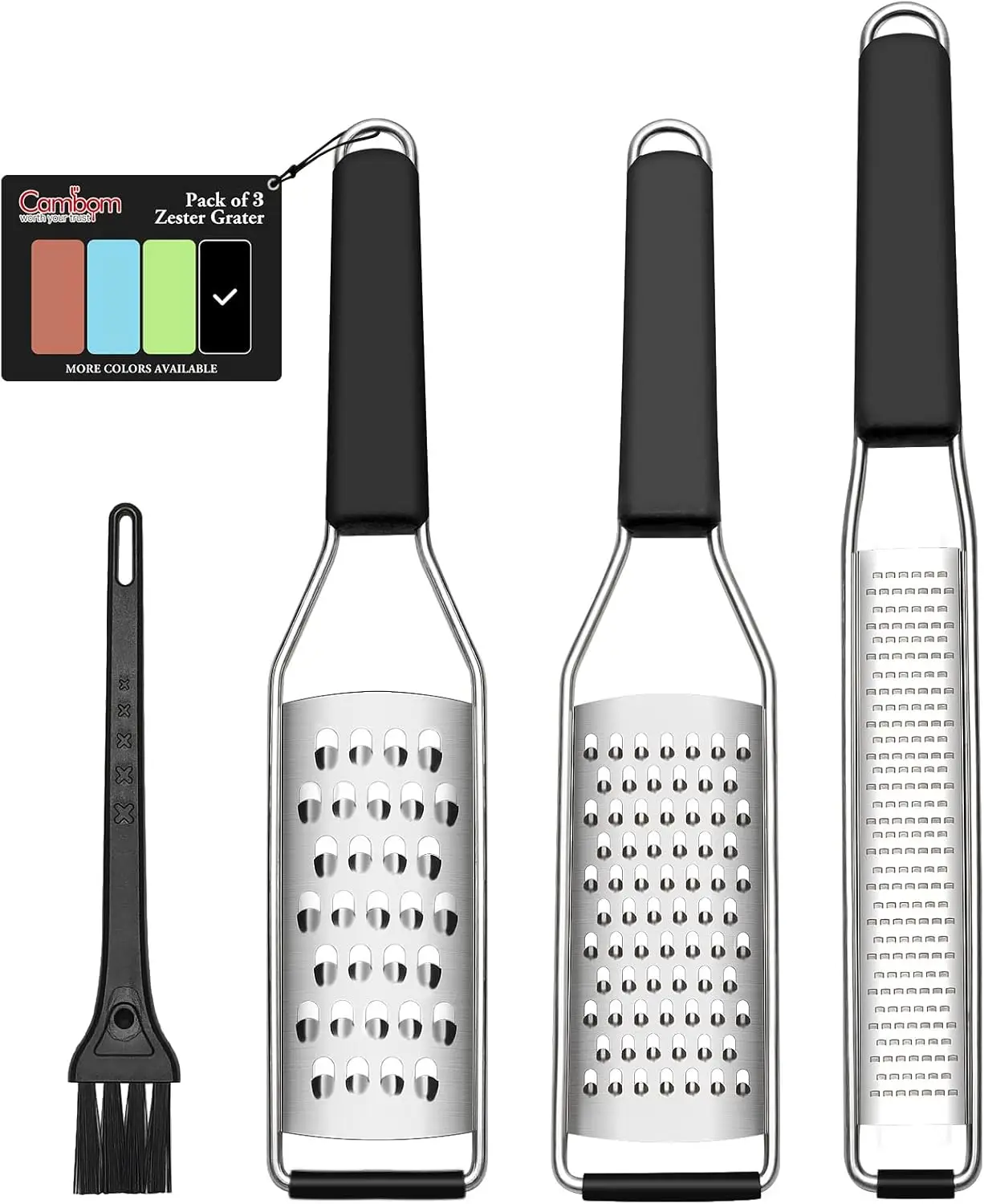
Our own set, and the only pick here that adds coarse surfaces. It includes three flat 304 stainless graters: a fine blade (11.8 by 1.45 inches) for zest, Parmesan, ginger, and spices, plus coarse and extra coarse blades (11.4 by 2.4 inches) for chocolate, soft cheese, carrots, and zucchini. Each one has its own snap-on protective shell, the TPR handles have anti-skid bars underneath, and a cleaning brush is included. Two honest notes: no independent test kitchen has reviewed this set yet, so it ranks here on its specifications, and its coarse blades are for shredding, not zest, since larger teeth catch the pith. If you only need the fine blade, it is also sold on its own.
Pros:
- Three surfaces, fine through extra coarse, in one set.
- A protective shell for every blade, plus a cleaning brush.
- 304 stainless; dishwasher safe per the listing.
Cons:
- No independent test results yet.
- Etched teeth are not claimed, unlike the Microplane and OXO picks.
- Coarse blades are not for citrus zest.
See the Cambom lemon zester and grater set for full blade details.
Also considered
- Deiss PRO Zester: a long rasp with a grippy handle that shears hard cheese quickly and carries a lifetime warranty. We left it out of the ranking because its length makes it off-balance, its upward-pitched teeth tear oversized shreds and can dig into the pith, and the raised dots on the handle press into the palm.
- Cuisipro Surface Glide Dual Grater: fine and coarse faces on one blade with feet underneath. It is a new design, and the older Cuisipro dual we know lacked a proper handle, so it stays off the list until this version proves itself.
- Kuhn Rikon Essential Zester: a short, sharp rasp at under 7 inches long. No long-term owner or test record yet.
- Microplane Classic Stainless: the handleless all-steel version of the Classic. Easy to clean, but harder to grip.
How to zest citrus without the pith
- Wash and dry the fruit. Zest is the outer peel, so it carries whatever is on the skin.
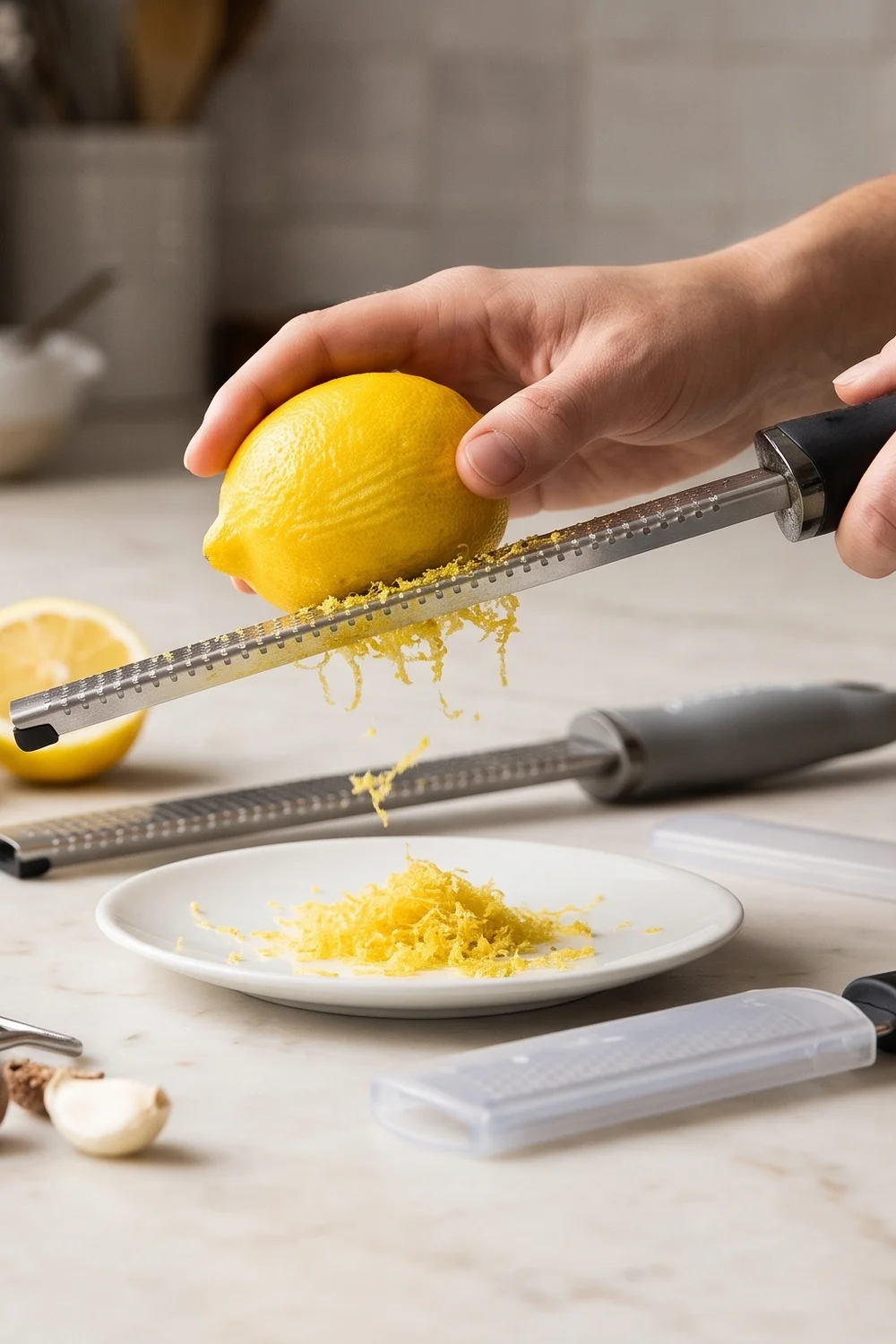
- Hold the rasp upside down over the fruit. The zest collects on the back of the blade where you can see it, instead of falling onto the board.
- Pull in one direction with light pressure. Sharp teeth do the work; pressing harder only reaches the pith.
- Rotate after every pass and stop at the first sign of white. The white pith is bitter.
- Tap the zest off the blade and use it right away, while the oils are fresh.
A medium lemon gives roughly a tablespoon of zest. If a recipe calls for zest and juice, zest first: a juiced lemon is too soft to grate.
How to clean and store a zester
- Rinse right after use. Hot water clears zest, cheese, and ginger fibers before they dry in the teeth.
- Brush with the grain. Use a soft brush on the underside and wipe in the same direction as the teeth. Scrubbing against them shreds sponges and can nick the edges.
- Don’t soak it. Water can seep into the handle.
- Hand-wash for a longer life. Most makers say dishwasher safe, but detergent and heat dull fine teeth over time.
- Store it covered. A blade cover protects the teeth from other utensils and protects your fingers when you reach into the drawer.
For cleaning the drum graters we sell, see our guide to cleaning a rotary cheese grater.
Which zester should you buy?
- You want one tool for zest, Parmesan, nutmeg, and garlic: the Microplane Premium Classic.
- You want the same blade for less: the Microplane Classic.
- You grate ginger and garlic most days: the Microplane Gourmet Fine paddle.
- You mostly zest citrus and press hard: the OXO Good Grips Etched Zester.
- You want fine and coarse surfaces with covers in one set: the Cambom Set of 3.
- You shred cheese by the cup: a zester is the wrong tool; see our best cheese grater and best rotary cheese grater guides.
Frequently Asked Questions
What is the best zester?
The Microplane Premium Classic. Its photo-etched teeth lift citrus zest without the bitter white pith, turn Parmesan into fluffy snow, handle nutmeg, garlic, and ginger, and stay sharp for years. The Microplane Classic uses the same blade on a cheaper, harder handle, and a paddle-style fine grater is the better choice if you grate ginger and garlic often.
What’s the difference between a zester and a cheese grater?
A rasp zester has one long, narrow surface of tiny, razor-sharp teeth that shave off only the colored outer peel of citrus and turn hard cheese into fine, fluffy shreds. A cheese grater has larger holes for shredding cheddar, mozzarella, and vegetables. A traditional citrus zester is a third tool: a short head with a single row of holes that pulls the peel off in thin ribbons for garnish.
How do you zest a lemon without the pith?
Hold the rasp upside down over the lemon so you can see the zest collect on the back of the blade, and draw it across the fruit in one direction with light pressure. Rotate the lemon after each pass and stop as soon as you see white. A sharp rasp with teeth set at the right height takes only the yellow layer; dull or high-set teeth dig into the pith.
Can you grate ginger with a zester?
Yes. A fine rasp or paddle grater turns peeled ginger and garlic into a smooth paste with no stringy pieces, and wider paddle graters do it fastest. Ginger fibers lodge in the teeth, so rinse the blade right away. Use a spoon to scrape the skin off the ginger first.
How do you clean a Microplane?
Tap it over a bowl to knock out loose bits, then rinse it under hot running water right after use. Brush the underside of the blade, wiping in the same direction as the teeth, never against them, since scrubbing against the teeth shreds sponges and can nick the edges. Don’t soak it, because water can seep into the handle. Dry it and slide the cover back on.
Can you put a zester in the dishwasher?
Most makers say you can, but hand-washing keeps the teeth sharp far longer. Dishwasher detergent, heat, and water pressure gradually dull fine etched teeth, and a loose rasp in the silverware basket is a hazard for whoever unloads it. Rinse it right after use instead.
Is a Microplane the same as a zester?
Microplane is the brand that made the rasp-style zester famous, so many cooks use the name for any rasp grater. Its Premium Classic is our top pick, but other rasp zesters work the same way: a long, narrow blade of fine, sharp teeth for zest, hard cheese, ginger, garlic, and nutmeg.
Reviewed by the Cambom Kitchen Team. Updated November 5, 2026.